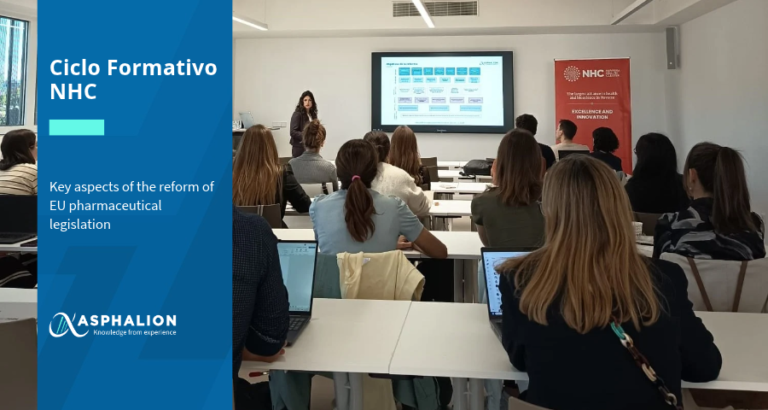

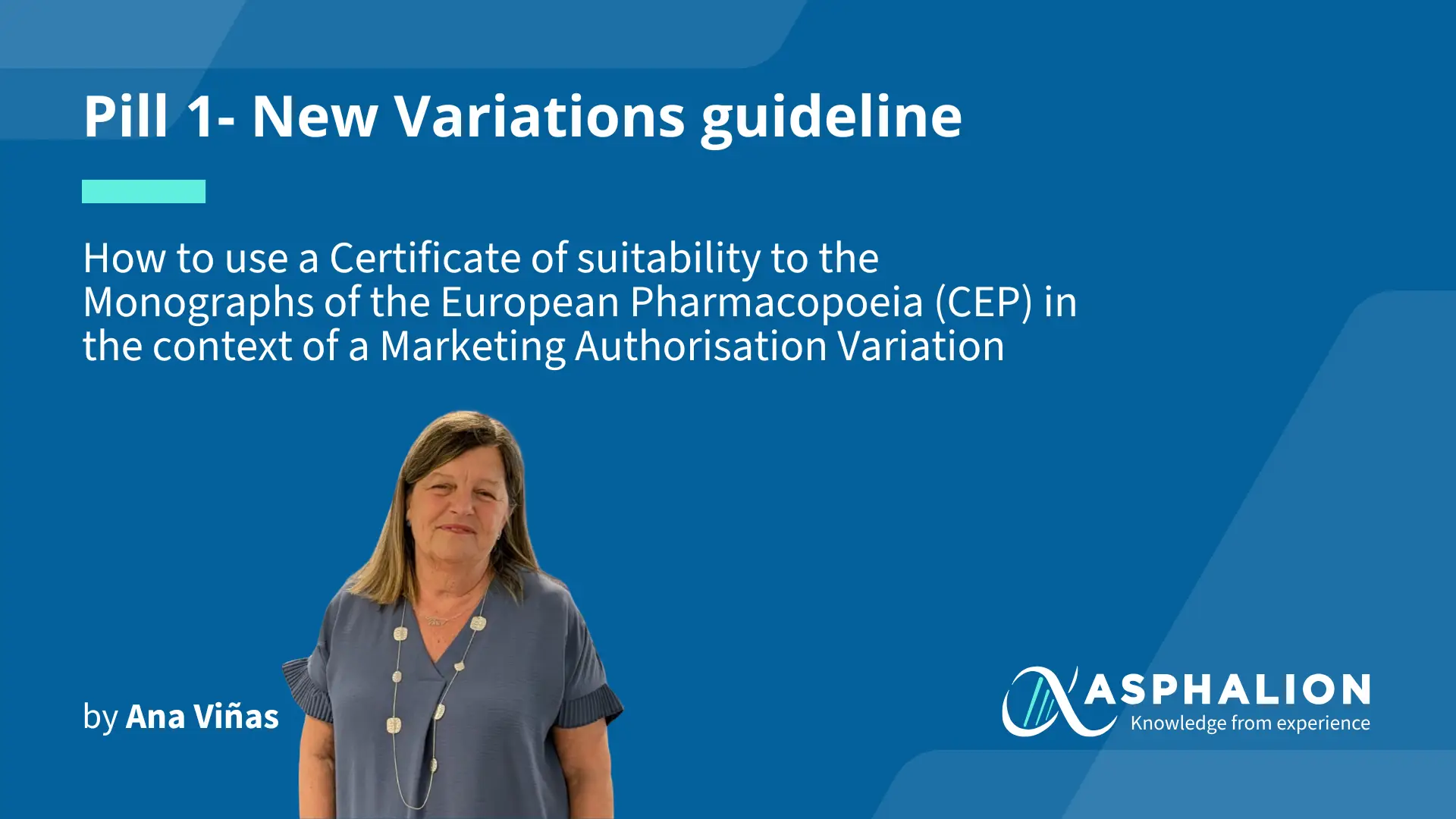
We are launching our new Pills series about variations, where our experts Ana Viñas will break down key topics of the new variations guideline.
In this first pill, Ana walks us through how to use a Certificate of Suitability to the Monographs of the European Pharmacopoeia (CEP) in the context of a Marketing Authorisation Variation (MAV).
CEP management is a frequent scenario in lifecycle management activities, but using it correctly in variations requires careful attention to regulatory expectations.
What does this pill cover?
- How to include a CEP in Module 3 (e.g., section 3.2.R and declaration/Letter of Access requirements)
- Types and formats of CEPs (Chemical CEP, Herbal CEP, TSE CEP, CEP 2.0 vs “old CEP”)
- Classification of variations for submission, update or deletion of a CEP (IA, IAin, IB)
- When additional Q.I variations are required (e.g., new sites, in-house methods, re-test period not included in the CEP)
- Key dossier considerations (S.2.1, S.4.1, S.4.2, S.4.3, S.3.2)
- Grouping and super-grouping possibilities for Type IA variations
- MAH responsibilities regarding API quality
Important reminders
- A CEP does not replace a Certificate of Analysis.
- A CEP does not replace a QP declaration.
- A CEP is not a GMP certificate.
- A variation is required whenever a new or updated CEP is implemented in the manufacturing process.
Lifecycle management requires strategic planning — and understanding how CEPs interact with the Variation Regulation is essential to avoid delays and compliance risks. Have a look at the PILL #1 here.
Next pill coming soon! Stay tuned!
If you need support with variations or regulatory strategies, our team will be happy to help. Contact us at: [email protected]