
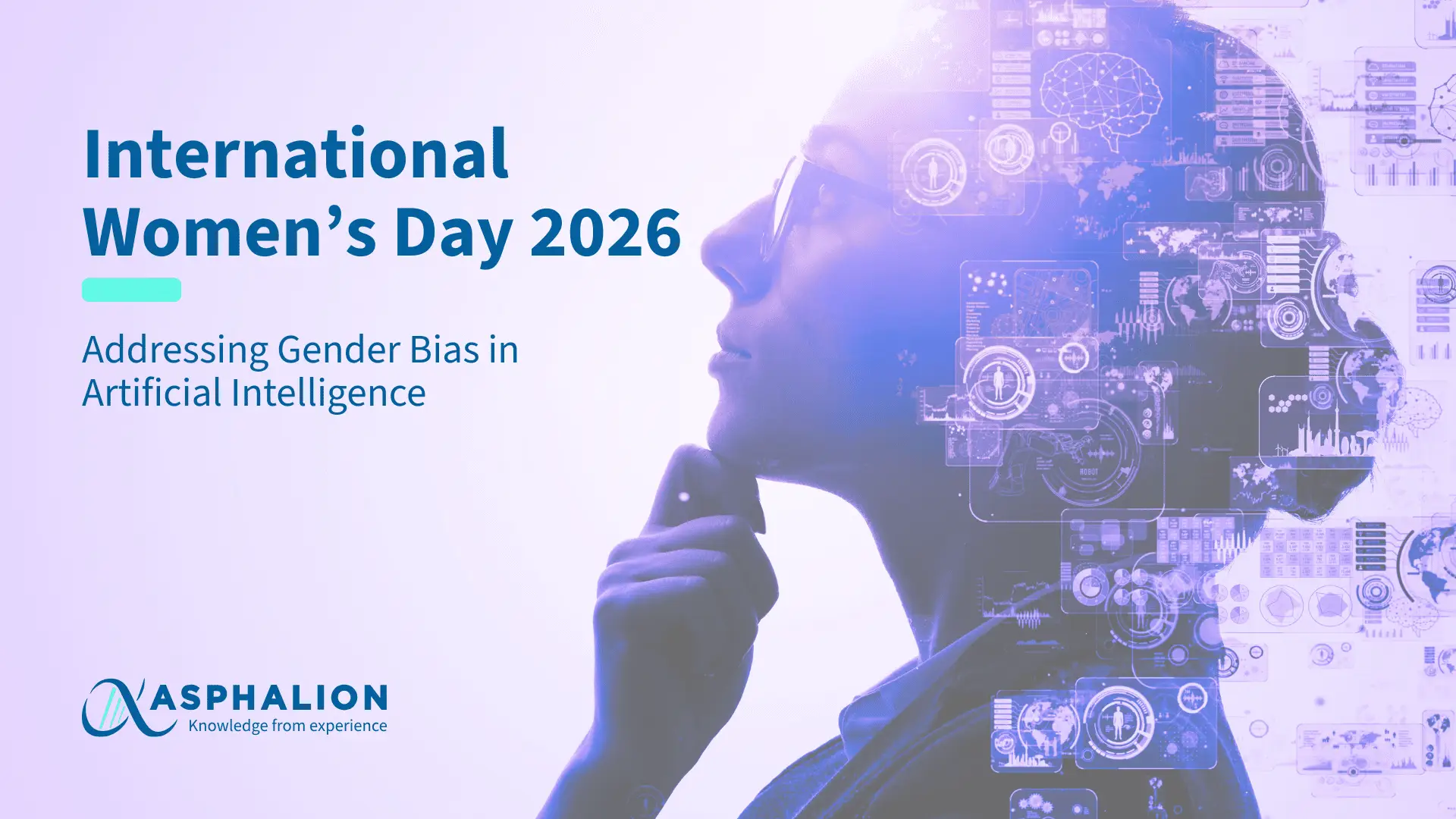
Last Friday, at ASPHALION, we had the opportunity to attend an insightful webinar organized by DISI Talent and led by Samuel Roldán on a topic that is becoming increasingly relevant: gender bias in Artificial Intelligence.
During the session, we explored an important reality: AI systems learn from historical data, and when those data contain biases, algorithms can unintentionally reproduce and even amplify them. Examples discussed included how AI may assign gender to certain professions based on stereotypes, or how clinical decision-support systems trained on historically biased datasets can lead to unequal outcomes. These cases remind us that technology is never truly neutral. AI does not inherently “understand” the world; rather, it reflects the labels, assumptions, and decisions that humans embed in the data used to train it.
For this reason, the development of responsible AI requires continuous oversight, transparency, and the use of tools designed to detect and mitigate bias. Initiatives such as bias testing frameworks, algorithmic audits, and emerging regulatory approaches are important steps toward ensuring that AI systems serve society in a fair and responsible way.
On International Women’s Day, this reflection becomes especially meaningful. Technology inevitably reflects the values and perspectives of those who design it—it is never a perfect mirror of reality. In many cases, it can become a set of opinions embedded in code.
However, when bias is removed and systems are designed to measure true potential, parity naturally emerges. Talent has no gender. When the rules are fair and abilities are evaluated with the same rigor for everyone, women and men share the same potential.
At ASPHALION, we believe it is our collective responsibility to ensure that technological systems support equality rather than undermine it. Today and every day, we reaffirm our commitment to contributing to a future where innovation and technology help advance fairness, inclusion, and equal opportunities for all.