
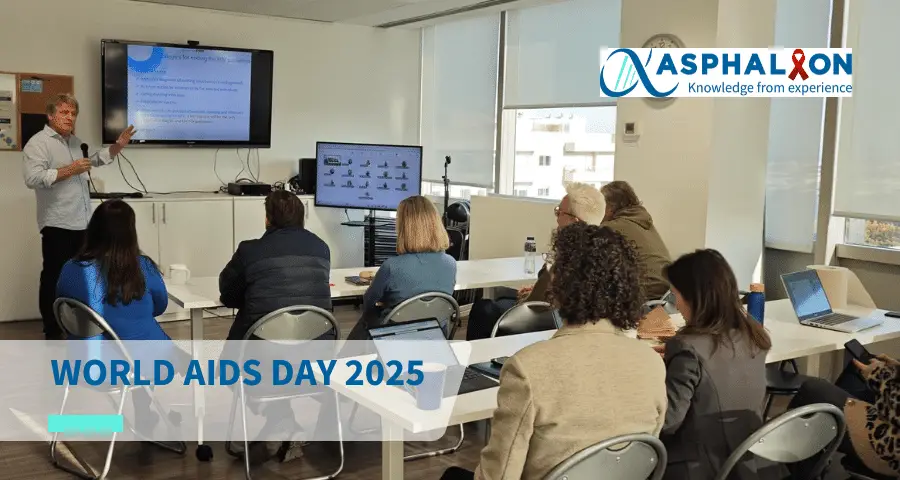
Today we marked World AIDS Day with a powerful AsphaForum session led by Dr. Christian Brander, a world-leading expert in HIV immunology and vaccine development.
More than 40 years into the epidemic, the challenge remains significant:
🔹 39.9 million people were living with HIV in 2023
🔹 1 million new infections each year
🔹 Inequity and decreasing global funding continue to slow progress
🔹 We still need an HIV vaccine — it will be a crucial, and possibly the only, component of sustainable prevention
Dr Brander walked us through the scientific, social and global hurdles that continue to shape the HIV response today:
Some of the key insights from the session:
HIV remains a global challenge: transmission continues rapidly, inequities persist, and around 1 million new infections occur each year. AIDS is far from “over,” with insufficient global funding and cuts in HIV vaccine support slowing progress.
Testing, treatment, and risk reduction are critical to interrupt transmission cascades, while U=U (Undetectable = Untransmittable) remains a cornerstone of prevention and quality of life.
Preventive HIV vaccines may be the only sustainable way to stop the pandemic, but their development is extremely complex.
Scientific hurdles: HIV is highly immunogenic and mutates rapidly, making durable, vaccine-induced immune responses challenging. Effective vaccines require multiple doses for proper T-cell and antibody maturation — a single-shot HIV vaccine is not realistic with current science.
Different approaches (immunogens, vectors, delivery systems) may be needed for preventive vs. therapeutic vaccines.
Trial design for both preventive and therapeutic candidates poses major ethical challenges.
Early progress: new B-cell vaccination strategies show promising results in prevention trials. The AELIX-002 study demonstrated prolonged viral control, but this is not considered medically sufficient long-term control.
Field challenges: despite advances, research remains fragmented, and global investment in preventive vaccines is still insufficient.
Impact potential: even a partially protective vaccine could reduce new infections by up to 30%, representing a major public-health benefit.
We are grateful to Dr. Brander for sharing his expertise and for reminding us that sustained scientific effort, global collaboration and equitable access to prevention tools are key to ending AIDS.
At Asphalion, we continue to raise awareness and support initiatives aimed at innovation, prevention and improved health for all.