
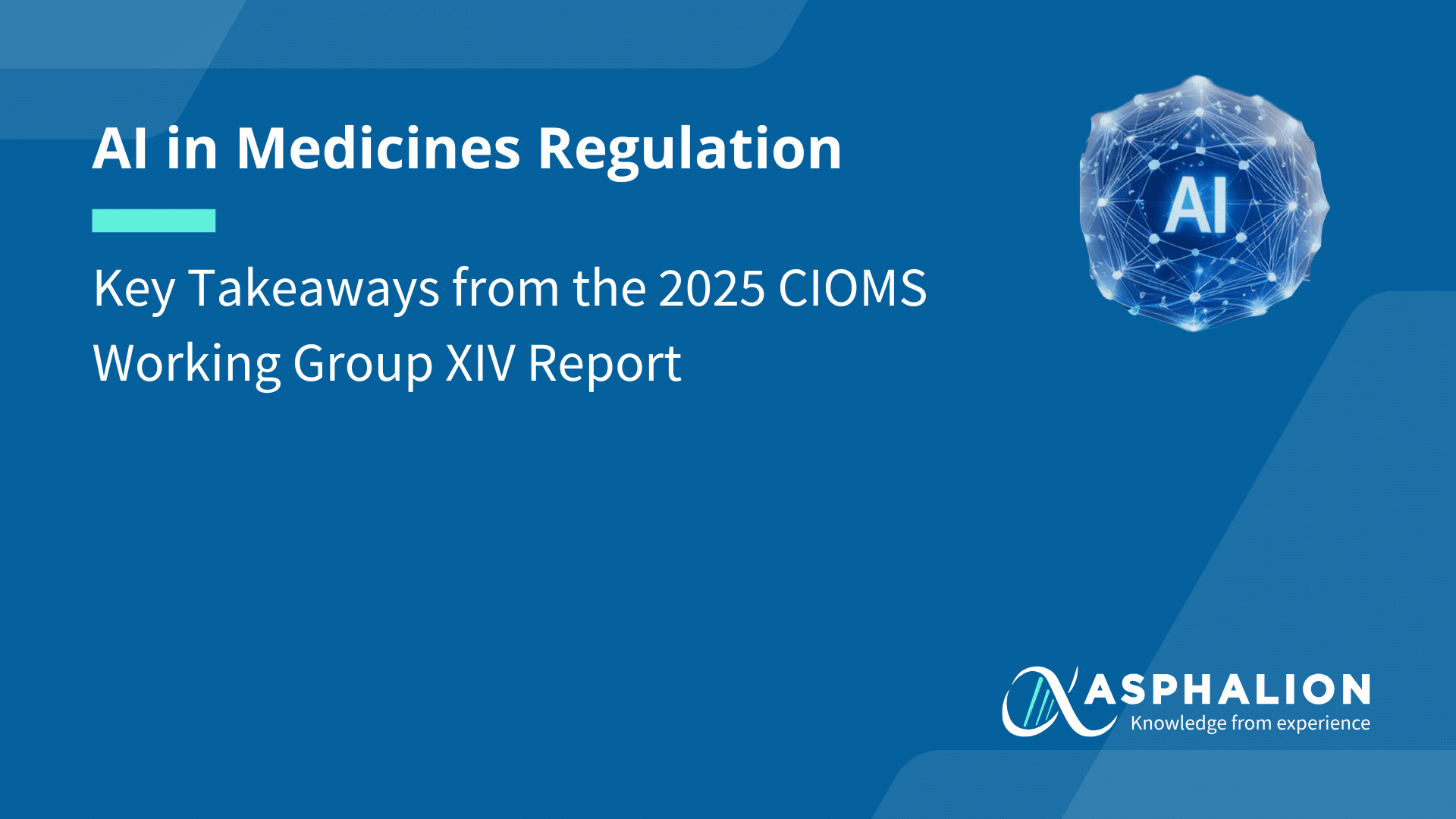
Last year, the Council for International Organizations of Medical Sciences (CIOMS) published the Working Group XIV report on the use of Artificial Intelligence (AI) in pharmacovigilance (PV). The document provides a principles-based framework to ensure responsible, ethical, and compliant AI implementation as adoption accelerates across the sector.
Below are the key highlights.
- Strategic Role of AI in Pharmacovigilance
AI is increasingly embedded in core PV processes, including:
- ICSR (Individual Case Safety Report) processing
- Literature screening
- Data coding
- Signal detection
- Safety data analysis
Its primary objective is to enhance efficiency, quality, and timeliness in safety monitoring, particularly in response to the exponential growth of adverse event data.
- Core Principles for Responsible Implementation
The CIOMS report defines foundational principles to guide AI integration in PV:
- Risk-based governance, proportionate to the impact of AI-driven decisions
- Human oversight and accountability, with clear responsibility retained by qualified professionals
- Robust validation and continuous performance monitoring under real-world PV conditions
- Transparency and explainability to support regulatory acceptance and stakeholder trust
- Data privacy protection, especially in large-scale data processing environments
- Fairness and bias mitigation, ensuring equitable safety outcomes
- Strong governance frameworks, including documentation, traceability, and audit readiness
- Looking Ahead
AI has the potential to shift pharmacovigilance toward earlier detection — and even prediction — of safety risks. However, technological innovation must remain grounded in scientific rigor, ethical safeguards, and sustained human control.
The CIOMS framework offers a structured and forward-looking foundation for organisations aiming to integrate AI into pharmacovigilance responsibly and in full alignment with regulatory expectations.
Conclusion
The 2025 CIOMS Working Group XIV report makes clear that AI is no longer a future prospect in pharmacovigilance, but a present and growing reality. As its integration expands across core PV activities, organisations must ensure that innovation is firmly grounded in risk-based governance, human oversight, robust validation, transparency, and strong ethical safeguards.
By providing a structured, principles-based framework, CIOMS supports the responsible and compliant adoption of AI—helping the industry enhance efficiency and safety monitoring while maintaining patient protection, regulatory trust, and scientific integrity at the center of all AI-driven initiatives.
Read the full report here: CIOMS Working Group XIV
At Asphalion, digitalisation is at the core of our processes, embedded across our regulatory and quality activities, enabling greater efficiency, strengthened oversight, and sustainable compliance in a rapidly evolving landscape.Principio del formulario
Contact us for further information: [email protected]